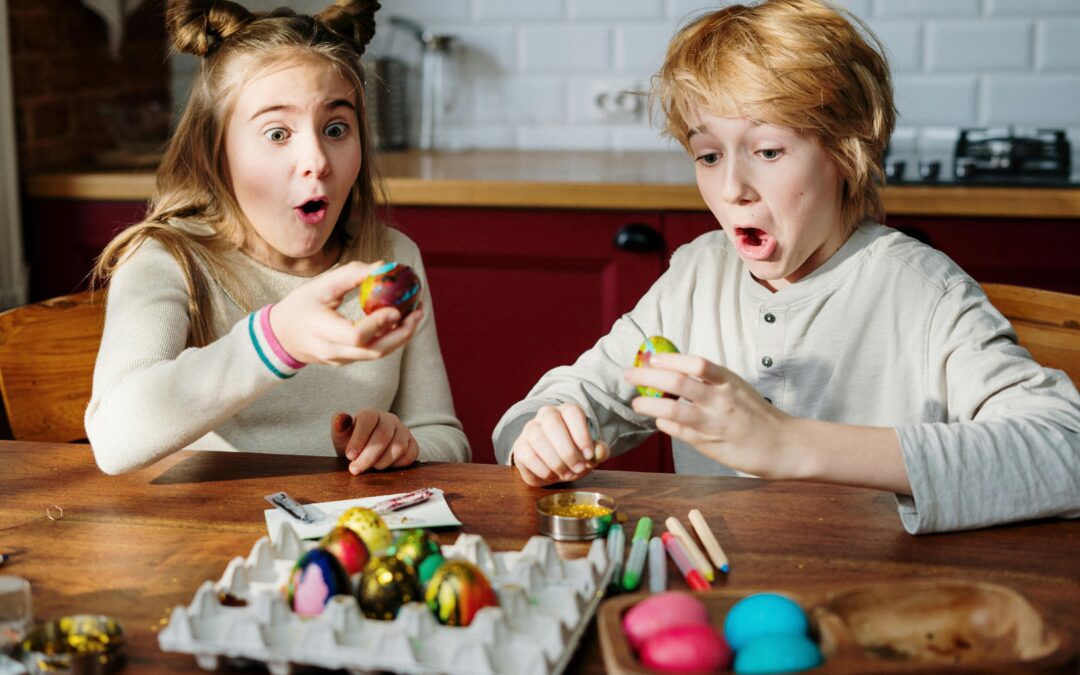
Easter and science might not seem like obvious partners — but crack open the possibilities and you’ll find that eggs, seasonal change, and the natural world offer some of the most captivating early science experiences of the year. At Daisy Lane Early Learning, we believe curiosity is the greatest gift we can nurture in a child — and Easter gives us the most wonderful excuses to get curious together.
Here in Drewvale, our close-knit community of children, families, and long-standing educators brings genuine warmth to everything we do. From our youngest in the Nursery right through to our Kindergarten children, our Easter science program sparks curiosity, wonder, and joy across every room.
🌼 Our Animal Scientists
Did you know that some of our best science conversations happen with Frankie the frog and our beautiful birds Bluey and Smokey? Our resident animal friends are living science lessons — teaching children about life, care, habitats, and the remarkable diversity of the natural world. At Easter, these conversations deepen naturally as children connect eggs, new life, and the animals they know and love.
🔬 Why Easter Is a Perfect Science Season
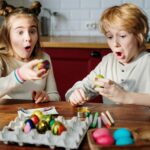
Science in early childhood isn’t about lab coats and textbooks — it’s about noticing, wondering, predicting, testing, and talking. It’s the look on a child’s face when the vinegar makes the egg shell go rubbery, or when the food colouring blooms through the water in a new pattern. These moments of genuine surprise and discovery are the seeds of scientific thinking that will grow throughout a child’s entire life.
Easter’s themes — new life, eggs, seasonal change, and the natural world — align beautifully with the key science concepts that are developmentally appropriate for children aged 0–6. Our educators weave science into every Easter experience with intention and delight, building the foundations of inquiry, observation, and critical thinking through play.
🧪 Six Easter Science Concepts We Love to Explore
- 🥚 Properties of Eggs — Hard shells, smooth surfaces, oval shapes — exploring the physical properties of eggs builds early materials science and descriptive language.
- 🌈 Colour & Mixing — Dyeing eggs, mixing colours, and watching pigments bloom in water introduces colour science, cause and effect, and visual observation.
- 🌿 Life Cycles — From eggs to chicks, caterpillars to butterflies — Easter is the perfect season to explore the life cycles of living things in our natural world.
- 🍂 Seasonal Change — Observing how the environment shifts as autumn arrives — cooler air, changing light, and the garden’s seasonal rhythms — builds environmental awareness.
- ⚗️ Simple Chemistry — The classic vinegar and egg experiment introduces the concept of chemical reactions in a safe, age-appropriate, and genuinely magical way.
- 🌱 Growth & Change — Planting Easter seeds and observing them sprout teaches children about plant life cycles, patience, and the relationship between care and growth.
🧫 Our Favourite Easter Egg Experiments
These experiments are designed to be safe, simple, and deeply engaging for young children. Our educators introduce each one as an invitation to explore rather than a demonstration to watch, following the child’s lead and letting their questions guide the science.
🧪 The Rubbery Egg (Naked Egg Experiment)
Age group: Best for Pre-Kindy & Kindy (3–5 years)
Submerge a raw egg in white vinegar for 24–48 hours and watch the shell slowly dissolve, leaving a surprisingly bouncy, translucent egg behind. Children love predicting what will happen, checking on the egg each day, and describing the result. This introduces chemical reactions — vinegar dissolving the calcium carbonate shell — in the most magical, tangible way.
🌈 Natural Egg Dyeing
Age group: All ages, adapted
Using ingredients from our in-house chef’s kitchen — beetroot, turmeric, red cabbage, spinach — children create beautiful natural dyes and observe how different plant pigments colour eggshells. This connects science, sustainability, and the provenance of natural materials. Younger children explore the dyed water with sensory play; older children predict which plant makes which colour.
🌊 Sink or Float Egg Experiment
Age group: Toddlers & Junior Kindy (2–4 years)
Fill two containers with water — add salt to one. Drop an egg into each and watch what happens. The egg sinks in fresh water but floats in the saltwater, demonstrating density in a completely surprising and repeatable way. Children can explore predictions, observations, and the follow-up question: “Why do you think it floated in one but not the other?”
🌸 Colour Explosion Milk Science
Age group: All ages, supervised
Pour full-cream milk into a shallow dish, add drops of food colouring, then touch a cotton bud dipped in dish soap to the surface. The colours explode outward in swirling patterns — one of the most visually stunning experiments for young children. Our in-house chef can usually source the milk for this! This explores surface tension in a completely magical, repeatable way.
🌱 Eggshell Seed Gardens
Age group: Junior Kindy, Pre-Kindy & Kindy (3–5 years)
Carefully crack eggs at the top, rinse out the shells, fill with soil, and plant fast-germinating seeds. Children care for their egg planters over the following days and watch life emerge from what was already an egg. When seedlings are ready, the whole shell can be planted directly in the ground — a beautiful lesson in sustainability and the cycle of new life.
🌟 From Our Educators
We always start our science experiences with a question, never an answer. “What do you think will happen if we put the egg in the vinegar?” invites children into the scientific process as genuine investigators rather than spectators. When the unexpected result appears — and it always does — the excitement is entirely their own. That ownership of discovery is what builds a lifelong scientific mindset.
🌿 Science in Our Natural Playground
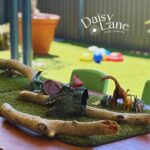
Our big natural playground — with its mud pit, bike track, and climbing frame — is one of the best science laboratories around. This Easter, our outdoor environments become spring science stations where children observe seasonal changes, search for insects and minibeasts, explore soil and plant growth, and bring their egg experiment learnings into the living, breathing world outside.
The mud pit alone offers extraordinary science opportunities at Easter — exploring soil composition, water absorption, and the relationship between moisture and plant growth. Combined with our seasonal garden observations and the presence of our animal friends Frankie, Bluey, and Smokey, our outdoor environments make science feel like the most natural and joyful thing in the world.
🐣 Don’t Miss It: FREE Easter Family Fun Day!
Saturday, 18 April 2026 · 10:00 AM – 1:00 PM · 4 Buckley Drive, Drewvale QLD 4116
Come and celebrate Easter with our whole Daisy Lane community! Join us for a morning of Easter magic, laughter, and family fun — completely FREE for children aged 0–6 and their families.
- 🎨 Paint Your Egg Station
- 🌈 Face Painting
- 🎵 Music & Games
- 🐰 Meet the Easter Bunny & photo opportunities
- 🥚 The Great Easter Egg Hunt (age groups: 0–6)
- 🍔 FREE food, refreshments, and sausage sizzle!
🌟 What to bring: Sunscreen, hat, water bottle, and your Easter enthusiasm! Free on-site parking available. Baby change facilities on-site.
🏡 Easter Science Fun at Home
The Easter science spirit doesn’t have to end at our gate! Here are some simple, safe experiments families can try at home:
- Rainbow celery — put celery stalks in glasses of coloured water and watch the leaves change colour over a few days, teaching children how plants drink and transport water.
- Eggshell chalk — grind dried eggshells into powder, mix with flour and water, and mould into chalk sticks. A brilliant sustainability lesson and a gorgeous Easter science activity.
- Fizzing Easter eggs — mix bicarb soda with food colouring and shape into egg forms. When children drop them in water or add vinegar, the fizzing reaction is endlessly entertaining.
- Observing ants and insects — head outdoors with a magnifying glass and watch the natural world closely. Autumn brings fascinating insect activity to any garden.
- Plant a seed in an eggshell — try the eggshell seed garden at home using leftover Easter egg cartons as seedling trays. Check on them each day — a countdown with a living reward.
At Daisy Lane Early Learning, every season is an invitation to wonder — and Easter, with its eggs, new life, and seasonal magic, might just be our favourite scientific adventure of the year. We are so proud of our community here in Drewvale, and we can’t wait to explore, experiment, and celebrate together.
🌸 From our big-hearted team — including Frankie, Bluey, and Smokey — wishing every Daisy Lane family a joyful, curious, and wonder-filled Easter season.
Further Reading & Sources
- National Quality Standard – ACECQA
- Belonging, Being & Becoming – Early Years Learning Framework, Australian Government
- Science for Young Children – Raising Children Network (Australia)
- Every Child Magazine – Early Childhood Australia
- STEM in Early Childhood – NAEYC
- Science Play for Young Children – Goodstart Early Learning
- Science for Preschoolers – Bright Horizons
- Science Experiments for Children – ABC Education