Nobody sits down with a three-year-old and explains the long-term cardiovascular benefits of regular physical activity. Nobody delivers a seminar to a toddler about the relationship between adequate sleep and cognitive function. And yet the habits a young child builds in their earliest years — around food, movement, rest, hygiene, and emotional health — are among the most durable and consequential they will ever form.
This is not because children are being programmed. It is because the early years are when normal gets established — and once something feels normal, it tends to stay that way.
At Daisy Lane Early Learning in Drewvale, healthy habits are not a health education topic we visit occasionally. They are woven into the ordinary fabric of every day — in the way we eat together, the way we move through the outdoor space, the way we talk about feelings, and the way we structure rest. The goal is never compliance. It is familiarity. A child who has grown up eating varied, whole foods feels differently about vegetables than one who has not. A child who has spent years running freely in outdoor spaces carries a different relationship with their body than one who has mostly been still. These are not small distinctions.
Food: It Is About So Much More Than Nutrition
The research on early eating habits is clear enough: the food patterns established before age five have a measurable influence on food preferences, appetite regulation, and dietary behaviour well into adulthood. But nutrition is only part of what mealtimes are doing in a quality early learning setting.
Eating together — sitting down, sharing food, talking about what is on the plate — is a social and emotional experience with its own developmental richness. Children who eat in warm, unhurried, conversational mealtime environments develop a different relationship with food than those who eat in isolation or in front of a screen. They learn that food is connected to community, to culture, to the pleasure of being together. That is a healthy habit too, and arguably a more lasting one than any particular dietary choice.
We approach food at Daisy Lane with genuine curiosity and without pressure. We offer variety. We talk about where things come from, what they taste and smell and feel like, and why different foods do different things for our bodies. We never force or bribe, because the research on both is unequivocal — pressure around eating builds anxiety, not appetite. What builds a genuinely adventurous, healthy relationship with food is repeated, relaxed, positive exposure. That is what we aim for, every single day.
For families navigating the perennial challenge of a selective eater at home, the most useful thing to know is this: it is almost always about control and familiarity, not stubbornness. Children who feel in control of their eating — who are offered choices, who are involved in preparing food, who are not pressured to finish what is on their plate — tend to expand their range over time. Patience and consistency, without drama, is genuinely the evidence-based approach.
Movement: A Necessity, Not a Reward
There is still a tendency in some environments to treat outdoor play as something children earn — the reward for sitting still and finishing the serious work. We find this deeply at odds with what we know about child development, and we do not operate that way.
Movement is not a break from learning. For young children, it is among the most important learning that happens. Gross motor development — the strength, coordination, balance, and spatial awareness built through climbing, running, jumping, and negotiating uneven terrain — is the physical foundation upon which fine motor skills, academic readiness, and emotional regulation are built. A child whose body has been appropriately challenged and stimulated through the day manages the quieter, more demanding cognitive work of the afternoon far better than one who has been primarily still.
The Australian 24-Hour Movement Guidelines recommend a minimum of three hours of physical activity spread across the day for children aged three to five. At Daisy Lane, this is not a target we work toward. It is a baseline we build from — because we know that Drewvale children who spend generous time outdoors each day arrive home as different people to those who have been mostly inside. Calmer. Hungrier. More ready for the evening, for dinner, for sleep.
Physical activity also does something for children’s mental health that deserves explicit acknowledgement. Regular vigorous movement reduces anxiety, improves mood, supports emotional regulation, and deepens sleep quality. It is not an exaggeration to say that adequate daily movement is one of the most effective mental health interventions available to young children — and it is free, accessible, and enjoyable.
Sleep and Rest: The Underrated Pillar
Sleep is the habit families most often mention feeling like they are failing at — and yet it is the one that, when protected consistently, makes everything else more manageable.
Young children between the ages of three and five need between ten and thirteen hours of sleep in every twenty-four-hour period. This is not a guideline that has much give in it. The developing brain consolidates learning during sleep. The body grows during sleep. The emotional system — the parts of the brain that regulate reactivity, impulsivity, and stress response — recovers during sleep. A child who is consistently under-slept is not simply tired. They are operating with a compromised capacity for learning, emotional regulation, and social engagement.
Rest, distinct from sleep, matters too. Even children who no longer nap benefit from a quiet, low-stimulation period in the middle of the day — time to decompress, to daydream, to let the busy morning settle before the afternoon begins. We protect this time in our daily rhythm deliberately, because we see what happens to children’s afternoons when they have had it versus when they have not.
For families trying to protect sleep at home, the most impactful thing is usually the wind-down hour before bed — reducing screens, reducing stimulation, keeping the sequence consistent. The routine itself becomes a sleep cue over time. Pyjamas, teeth, story, bed. Done the same way enough times, it starts to work without effort.
Hygiene as Community Care
Handwashing, covering coughs, caring for shared spaces — these practices live somewhere between health education and character education, and we treat them accordingly. When we frame hygiene not as a set of rules to follow but as a way of caring for the people around us, children engage with it differently. It becomes meaningful rather than obligatory.
A four-year-old who understands that washing their hands before eating protects their friends as much as themselves has learnt something genuinely important about what it means to be part of a community. That is a value, not just a habit. And values, once established in the early years, tend to stick.
We also use hygiene moments — which happen many times each day — as opportunities for independence and fine motor development. A child who manages the tap, pumps their own soap, and dries their own hands is practising self-regulation and physical dexterity every single time. The most ordinary moments, repeated enough, become the building blocks of capable, confident little people.
Emotional Health: The Habit Nobody Puts on the List
Every conversation about healthy habits in early childhood eventually needs to include emotional wellbeing — because the habits children form around their inner lives are just as significant as anything they do with their bodies.
Children who grow up in environments where feelings are named, normalised, and responded to with warmth develop a different emotional architecture to those whose feelings were ignored, shamed, or simply never acknowledged. They learn that difficult emotions are survivable. That asking for help is sensible rather than weak. That the full range of human feeling — including the uncomfortable, inconvenient bits — is acceptable and manageable.
This is a habit. A disposition, really. And like all habits, it is built incrementally, through thousands of small ordinary moments in which the adults around a child respond to their emotional experience with presence and care rather than impatience or dismissal.
At Daisy Lane, emotional literacy is not a program. It is a daily practice — in how we greet children each morning, in how we respond to conflict, in how we name what we observe, in how we make space for the child who is having a hard day without making them feel like a problem to be solved.
The Habit of Simply Being Outside
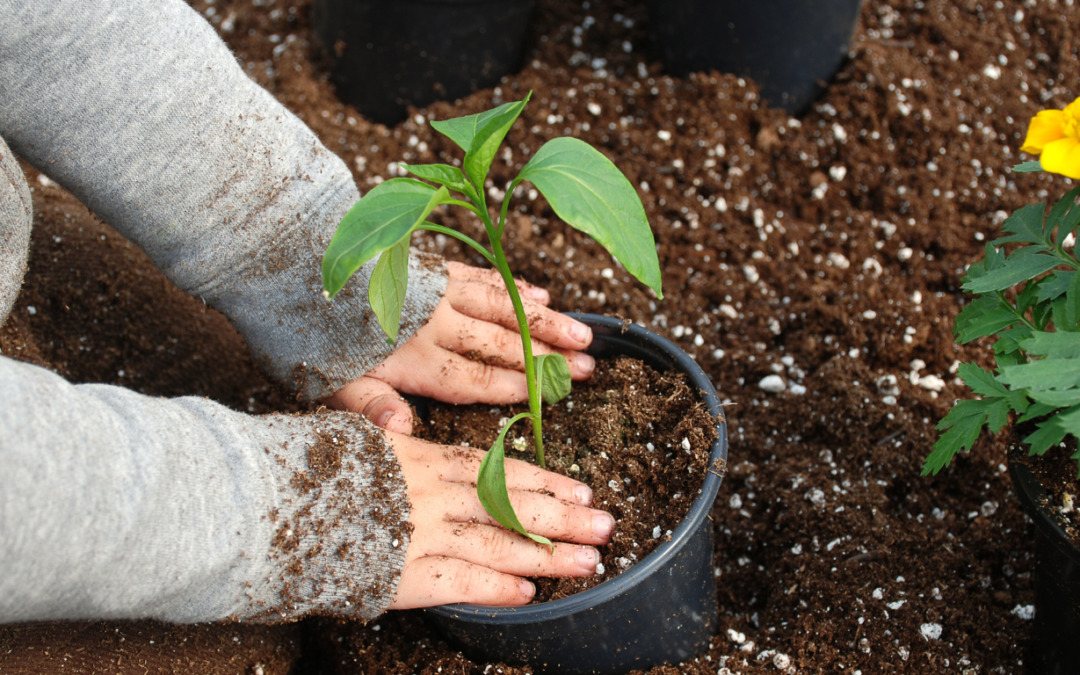
One final healthy habit worth naming, because it is increasingly at risk in children’s lives: the habit of spending time in the natural world.
Children who have regular, unhurried access to natural environments — grass, trees, dirt, water, open sky — develop differently to those who do not. The research on this is now substantial enough that it has moved from interesting observation to genuine public health concern. Time in nature reduces stress hormones, improves attention, supports immune function, and builds the kind of physical and environmental confidence that indoor environments cannot replicate.
In Drewvale, we are fortunate to be surrounded by the kind of suburban greenery and open space that makes this accessible. Making the most of it — in the outdoor program at the centre, and in the parks and backyards and local streets at home — is itself a healthy habit worth building. One that, started early enough, tends to last a lifetime.
Healthy habits in early childhood are not about perfection. They are not about every meal being nutritionally optimal or every bedtime being exactly on schedule. They are about the general direction — the accumulated weight of ordinary days that gradually establish what feels normal, what feels good, and what a child comes to expect from their body, their world, and the people in it.
We are proud to be part of building that foundation alongside your family.
📞 07 2802 5430 ✉️ enrolments@daisylaneearlylearning.com.au 📍 4 Buckley Drive, Drewvale QLD 4116 🕐 Monday – Friday, 6:30am – 6:00pm 🌐 daisylaneearlylearning.com.au
Sources
- Australian Government Department of Health – Australian 24-Hour Movement Guidelines for the Early Years (Birth to 5 Years) https://www.health.gov.au/resources/publications/australian-24-hour-movement-guidelines-for-the-early-years-birth-to-5-years
- Eat for Health – Australian Dietary Guidelines, National Health and Medical Research Council https://www.eatforhealth.gov.au
- Australian Children’s Education & Care Quality Authority (ACECQA) – Belonging, Being & Becoming: The Early Years Learning Framework for Australia (EYLF V2.0) https://www.acecqa.gov.au/sites/default/files/2023-01/EYLF-2022-V2.0.pdf
- Raising Children Network – Sleep: How Much Do Children Need? https://raisingchildren.net.au/toddlers/sleep/understanding-sleep/sleep-children
- Louv, R. – Last Child in the Woods: Saving Our Children from Nature-Deficit Disorder (Algonquin Books, 2005) https://richardlouv.com/books/last-child
- Satter, E. – Child of Mine: Feeding With Love and Good Sense (Bull Publishing, 2000) https://www.ellynsatterinstitute.org
- Beyond Blue – Healthy Kids, Happy Kids: Emotional Wellbeing in the Early Years https://www.beyondblue.org.au
- Hanscom, A. – Balanced and Barefoot: How Unrestricted Outdoor Play Makes for Strong, Confident and Capable Children (New Harbinger Publications, 2016) https://www.newharbinger.com
- Zero to Three – Healthy Habits Start Early: Movement, Sleep and Emotional Wellbeing https://www.zerotothree.org
- Daisy Lane Early Learning – Our Approach to Wellbeing and Healthy Development https://daisylaneearlylearning.com.au